Every Piece Has a Place SVG: A Design Evaluation
The digital crafting landscape offers a vast array of resources for educators and DIY enthusiasts looking to create custom apparel and classroom decor. Among these resources, the Every Piece Has a Place SVG design bundle has emerged as a popular option for those seeking to celebrate the profession of teaching through visual media. This article provides an objective analysis of this specific digital asset, exploring its technical specifications, practical applications, and suitability for various user needs.
Understanding the Digital Asset
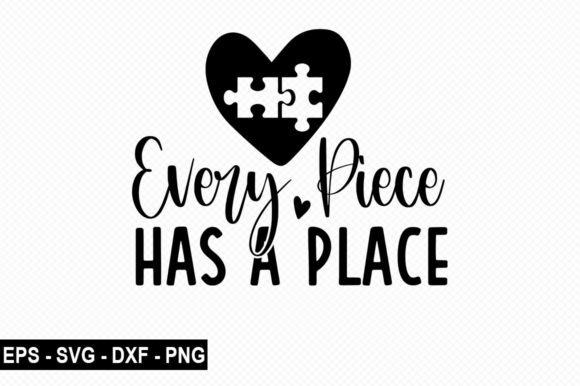
The Every Piece Has a Place SVG is a vector-based graphic file designed specifically for use with electronic cutting machines such as Cricut and Silhouette. The phrase itself serves as a metaphor for the role of a teacher in organizing knowledge and guiding students, making it a thematic fit for educational settings. Unlike raster images that lose quality when resized, vector files like SVGs (Scalable Vector Graphics) maintain crisp edges at any scale. This particular bundle typically includes multiple file formats: EPS (Encapsulated PostScript), DXF (Drawing Exchange Format), and PNG (Portable Network Graphics).
The inclusion of these diverse formats addresses the varying requirements of different software ecosystems. For instance, while SVG is the native format for many modern cutting machines, older software or specific professional printing workflows may require EPS or DXF files. The high-resolution PNG component usually features a transparent background, allowing users to overlay the text onto other images within photo editing software without dealing with unwanted white boxes. Understanding the composition of this file bundle is the first step in determining its utility for a specific project.
Reasons for Interest and Target Audience
Several factors drive interest in the Every Piece Has a Place SVG. Primarily, educators often seek unique ways to express their identity and passion for their work. Standardized merchandise available in retail stores may not offer the personal touch or specific messaging that a teacher desires. By utilizing a digital cut file, individuals can customize t-shirts, tote bags, mugs, and wall art with a message that resonates personally with them or their school community.
Beyond personal expression, there is a practical motivation regarding cost and customization. Creating custom apparel using heat transfer vinyl (HTV) or iron-on materials is often more economical than purchasing pre-made branded items in bulk. Furthermore, the ability to adjust the size of the design means that one file can serve multiple purposes, from a small logo on a pen to a large statement piece on a classroom banner. The versatility of the file formats ensures that whether a user is a hobbyist with a home machine or a small business owner running a print-on-demand operation, the asset remains functional.
Benefits and Practical Advantages
The primary benefit of this design lies in its scalability and compatibility. Because the core file is a vector, users can resize the "Every Piece Has a Place" text to fit any garment size without pixelation. This is a critical advantage over lower-quality image files that become blurry when enlarged. Additionally, the multi-format bundle reduces the need to purchase separate licenses or convert files manually, streamlining the workflow for creators.
Another significant advantage is the aesthetic flexibility. The clean lines of the typography allow for easy layering with other design elements. Users can change colors, add borders, or combine the text with other graphics to create a cohesive look for a classroom theme or a teacher appreciation gift. The transparent PNG file further expands usability, enabling quick mockups for social media or integration into digital invitations and newsletters without extensive graphic design skills.
Tradeoffs and Considerations
While the Every Piece Has a Place SVG offers clear benefits, potential users must consider certain tradeoffs. The most notable limitation is the requirement for specialized equipment. To fully utilize the SVG, DXF, and EPS files, a user needs access to a compatible cutting machine and the corresponding design software. Without these tools, the vector files are less useful, leaving only the PNG option, which limits the types of projects that can be undertaken.
Furthermore, the success of the final product depends heavily on the user's skill level with the chosen medium. Cutting intricate text requires proper weeding, alignment, and application techniques. If the user is new to vinyl crafting, the complexity of applying text to curved surfaces like mugs or textured fabrics like tote bags may present a learning curve. There is also the consideration of licensing; users must verify the terms of use included with the download to ensure they comply with restrictions regarding commercial sales or the number of end products allowed.
Situational Fit and Alternatives
This design is a strong fit for individuals who already own a cutting machine and have basic proficiency in design software. It is particularly well-suited for teachers planning to create gifts for colleagues, host a classroom event, or produce limited-run merchandise for a school fundraiser. The specific phrasing appeals to those who value organization and structure in education, making it an ideal choice for homeroom teachers or department heads.
However, alternatives may be worth considering in certain scenarios. If a user does not own a cutting machine and does not intend to purchase one, investing time in learning how to use vector files may not be efficient. In such cases, ordering a pre-printed shirt from a print-on-demand service that allows text uploads might be a faster solution, even if the font choices are more limited. Similarly, if the goal is to create highly complex, multi-colored illustrations rather than simple text-based designs, a more elaborate clipart bundle or a custom illustration by a graphic designer might yield better results.
For users focused strictly on digital marketing materials where physical production is not involved, the PNG file alone may suffice, rendering the vector components unnecessary. Conversely, for those needing industrial-grade printing capabilities, the standard SVG resolution might not meet the specific color profile or line weight requirements of large-scale commercial printers, necessitating a professionally drafted vector file.
Decision-Making Insights
To determine if the Every Piece Has a Place SVG aligns with your goals, evaluate your current toolkit and project scope. Ask yourself if you have the necessary hardware to cut vinyl or if you plan to outsource the production. If you have the equipment, consider whether the specific message fits the tone of your intended audience. The design is versatile, but its impact relies on the context in which it is used.
Additionally, assess the volume of your project. If you need to produce hundreds of items quickly, the manual process of weeding and pressing vinyl for each item may be too time-consuming compared to screen printing or direct-to-garment methods. However, for small batches or one-off personalized gifts, the flexibility of the digital bundle offers a superior balance of cost and customization. Ultimately, the value of this resource is derived from the user's ability to leverage the provided formats to execute their vision effectively.
In conclusion, the Every Piece Has a Place SVG serves as a practical tool for educators and crafters who possess the right equipment and desire a customizable, scalable design. By understanding its technical strengths and limitations, users can make informed decisions about whether this asset will successfully support their creative and professional objectives.