Learning Process Through Online Classes
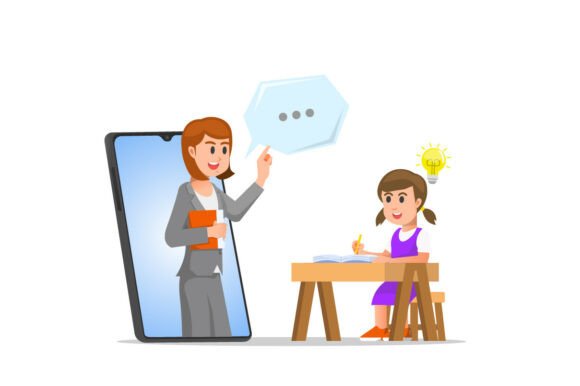
Imagine a classroom where the walls are digital and the desk is a glowing screen. In this modern setting, a student sits before a giant smartphone, its massive display dominating her field of vision. On that screen, a teacher holds a book, speaking directly to her as if they were sitting across from each other in a quiet library. This striking visual captures the essence of the learning process through online classes: it is intimate, immediate, and entirely dependent on technology to bridge the physical gap. The sheer size of the device in this mental image emphasizes how central connectivity has become to our education. It is no longer just about accessing information; it is about the quality of the connection between learner and instructor.
The Digital Shift in Education
The learning process through online classes represents a fundamental shift in how knowledge is transferred. Unlike traditional models where time and location dictate access, digital learning decouples these constraints. The giant smartphone metaphor illustrates more than just a tool; it symbolizes a portal. When a teacher appears on that screen, holding a book and instructing with clarity, the medium becomes transparent. The focus shifts from the technology itself to the pedagogy happening within it.
This adaptation proves that education can remain effective without physical presence. The intimacy of the virtual classroom relies on high-quality video, responsive platforms, and intentional teaching strategies. For the digital age, the "classroom" is wherever you have an internet connection, and the "teacher" is accessible through a tap on a screen. This evolution allows for a personalized experience where the scale of the audience does not dilute the quality of instruction.
Why Different Audiences Care About Virtual Learning
The relevance of online education varies significantly depending on who is looking at that giant smartphone. For a beginner, the screen represents opportunity and accessibility. For a seasoned professional, it represents efficiency and upskilling. For an educator, it represents a new frontier of reach and engagement. Understanding these nuances helps clarify why the learning process through online classes is not a one-size-fits-all solution but a versatile framework adaptable to diverse needs.
Beginners and Hobbyists often prioritize ease of use and cost. They may be exploring a new interest, such as coding, painting, or language acquisition, without the commitment of a formal degree. For them, the online class is a low-risk environment to test their curiosity. The visual of the teacher on the phone suggests guidance without pressure. They value platforms that offer self-paced modules, clear instructions, and affordable pricing. If the interface is clunky or the content is too dense, they may disengage quickly.
Professionals and Entrepreneurs, however, view the same screen through a lens of commercial value and speed. A marketing manager needing to learn SEO trends or a small business owner studying financial modeling cannot afford months of slow progress. Their priority is reliability and long-term usefulness. They need the learning process to be streamlined, offering actionable insights that can be applied immediately to their work. For them, the "giant smartphone" is a direct line to career advancement. They evaluate courses based on the credibility of the instructor, the depth of the curriculum, and the ability to integrate learning into a busy schedule.
Evaluating Priorities: Quality vs. Flexibility
When assessing whether online classes fit your goals, several priorities come into play. These factors determine the success of the learning journey and vary by user intent.
- Flexibility: The ability to learn on your own schedule is the primary draw for working adults and parents. Unlike fixed semester dates, online classes allow you to pause, rewind, and resume as life demands.
- Quality of Instruction: Just because a course is online does not mean it lacks rigor. High-quality programs feature interactive elements, assessments, and direct feedback loops that mimic the responsiveness of a physical classroom.
- Cost Efficiency: Removing the overhead of physical campuses often reduces costs. However, free resources may lack structure, while premium certifications offer recognized credentials. Balancing budget with educational value is crucial.
- Technical Reliability: The seamless experience depicted in the smartphone illustration depends on stable infrastructure. Slow load times or poor audio can break the immersion and hinder the learning process.
- Creativity and Engagement: Modern ed-tech uses gamification, quizzes, and collaborative projects to keep learners engaged. The presentation style must match the complexity of the subject matter.
Tailoring the Experience to Your Goals
How do you know if the learning process through online classes matches your specific situation? Consider your current skill level and your ultimate objective. If you are a creator or freelancer, you might use these classes to master new software tools or design techniques. Your focus will likely be on practical application and portfolio building. You need courses that provide hands-on projects rather than just theoretical lectures.
For educators and publishers, the perspective shifts from consumption to creation. They are evaluating how to deliver content effectively. The giant smartphone serves as a reminder that their audience expects a polished, engaging digital product. They must consider how to translate complex concepts into digestible digital formats, ensuring that the virtual classroom feels personal and supportive.
Consumers and Small Business Owners often look for quick wins. They want to solve a specific problem, such as improving customer service skills or understanding digital marketing basics. For them, the length of the course matters less than the immediacy of the solution. A short, intensive workshop delivered via a mobile-friendly platform might be more valuable than a year-long certification program.
The Role of Technology in Facilitating Connection
The illustration of the teacher on the massive phone highlights a critical truth: technology is the facilitator, not the replacement. The human element remains paramount. Effective online learning requires instructors who can convey enthusiasm and empathy through a screen. It requires students who possess self-discipline and the motivation to engage actively.
As we move further into the digital era, the distinction between "online" and "offline" learning continues to blur. Hybrid models are becoming common, where live virtual sessions are combined with asynchronous study materials. This flexibility ensures that education remains inclusive, reaching individuals regardless of their geographic location or physical abilities.
Ultimately, the learning process through online classes is about empowerment. Whether you are a 20-year-old student starting their first coding bootcamp or a 50-year-old entrepreneur pivoting their business model, the digital classroom offers a path forward. It challenges us to adapt, to embrace new tools, and to recognize that the pursuit of knowledge knows no boundaries. By understanding your unique priorities—be it cost, speed, quality, or flexibility—you can navigate this vast digital landscape and find the educational experience that truly resonates with your goals.